

Who Invented Makeup Pictures Of Egyptian Mummies
A 3,500-year-former mummified woman's head shows signs of a skin condition from bleaching. The woman may have been prominent in Egyptian society and was 20 to 25 years old when she died, researchers report.
The identity of the adult female is not known, simply tiny nodules nether her cheeks and on the back of her neck resemble a skin disorder known today every bit exogenous ochronosis. Despina Moissidou, a Greek anthropologist, told Discovery News that "such dermatosis is acquired by the extensive use of skin-bleaching cosmetics."
Chemical assay of the nodule confirmed the diagnosis.
Peel tone was a possible indicator of social condition in ancient Egypt, said Angel Gonazlez of the School of Legal Medicine in Madrid. "Perhaps information technology was a symbol of high social status, indicating the private did not perform hard outdoor work or work at all, just similar the plain-featured anxiety or the extremely long nails for the ancient loftier-class Chinese women."

An official photographic portrait of Empress Dowager Cixi (29 November 1835 – 15 November 1908), aged around 55 years. ( Public Domain ) Note her long fingernails.
The mummified caput is in the collection of the Museo de Antropología Médica, Forense, Paleopatología y Criminalística in Madrid, which is Gonzalez's institution. It was originally called the "beheaded head of a Guinean negress young woman."
- Aboriginal Egyptian pigment provides modern forensics with new coat of pigment
- Changing Beauty: The Use of Elaborate Wigs in Ancient Arab republic of egypt
But subsequent assay in 2007 past Moissidou and her colleagues showed it was actually Egyptian. They traced the head to the Theban Necropolis cemetery and archaeological area. They said the mummification style puts the woman's life in the 18th Dynasty of the New Kingdom, between the reigns of Thutmose 2 and III. This is the all-time-known Dynasty to the full general public because several prominent pharaohs lived then, including Tutankhamun, Akhenaten, Hatshepsut, and Amenhotep Three, says an article nigh the researchers' conclusions.
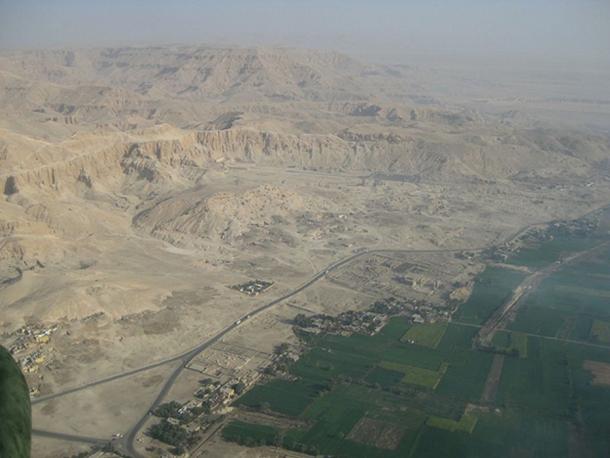
Aerial view Theban Necropolis. ( Steve F-Due east-Cameron/CC BY iii.0 )
The woman's head ended upwards in the Cairo Museum sometime in the tardily 19th or early 20th century. Castilian collector and banker Ignacio Bauer bought the head and later sold it to Museo de Antropología Médica, Forense, Paleopatología y Criminalística in Madrid. Gonzalez believes the quality of the head'southward embalming shows she was an important member of society.
The researchers did several analyses and examinations to settle on a diagnosis of exogenous ochronosis. They took samples from the base of the woman's neck for histological examination. The chemical and medical assay showed she had chronic skin inflammation. Examination with an electron microscope showed the same types of pathologies equally in mod people who have the condition.
"Nosotros know the ancient Egyptians regarded the use of cosmetics both for aesthetic purposes as well every bit magical and religious ones. Cosmetic pigments were indeed used on a daily ground," Moissidou explained.
- Bygone Beauty and Body: The Origins of Cosmetics in the Ancient Globe
- Pharaoh bows to god of gods in newly discovered quarry etching
Royal family unit members frequently used cosmetics that independent lead, which causes pare disease and inflammation. Moissidou told Discovery News that the fact that this adult female used cosmetics "opens up new interesting questions on the head'due south identity." She said more inquiry will exist done to determine who the mummy might accept been during her life.
In an article on Reshafim.org titled "Personal Hygiene and Cosmetics," it says aboriginal Egyptians of both sexes and whatsoever social status used cosmetics for personal beautification and therapeutic reasons.
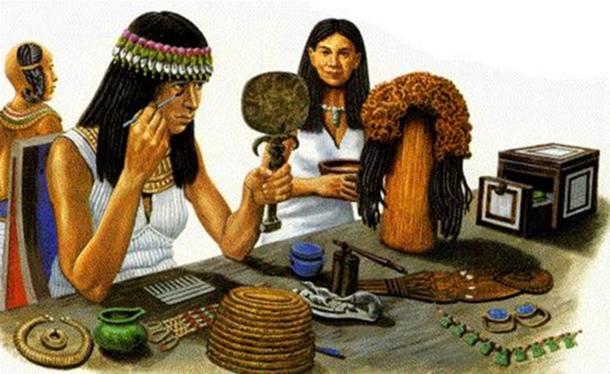
A motion picture of an Egyptian woman applying kohl to her eyes. ( Earth of Cosmetology )
According to that article, they used white makeup, black makeup fabricated of carbon and lead sulfide (galena) or manganese oxide (pyrolusite). They as well used green makeup made of malachite and other copper-based minerals. A brush was used to use footing red ochre to the cheeks and lips. Black kohl was applied to the optics with a stick. People of prominent status had a professional person "face painter" who did their makeup.
The ancient Egyptians used henna to die fingernails orange and yellow. They likewise applied oils and unguents to the skin to requite it protection from the air of Egypt, the bulk of which is situated just northward of the equator and is very hot.

An 18th Dynasty Ancient Egyptian kohl container inscribed for Queen Tiye (1410–1372 BC). ( Public Domain )
Reshafim.org states:
"Even after death one had to take care of one's looks. When presenting oneself earlier the gods during the Judgment of the Dead one had all-time observe sure rules of dress and make-upwardly in club to make the correct impression:
A man says this spoken language when he is pure, clean, dressed in fresh clothes, shod in white sandals, painted with eye-pigment, all-powerful with the finest oil of myrrh.
Chapter 125 of the Book of the Dead [ 24 ]
Because of their importance in the afterworld cosmetics were amongst the offerings left in tombs. Seshat-Hetep, called Heti [an official of the Egyptian 5th Dynasty, which reigned from 2498 to 2345 BC], lists among the offerings in his mastaba [tomb] at Giza:
Incense, green make-upwards, black middle-paint, the best of ointment ..."
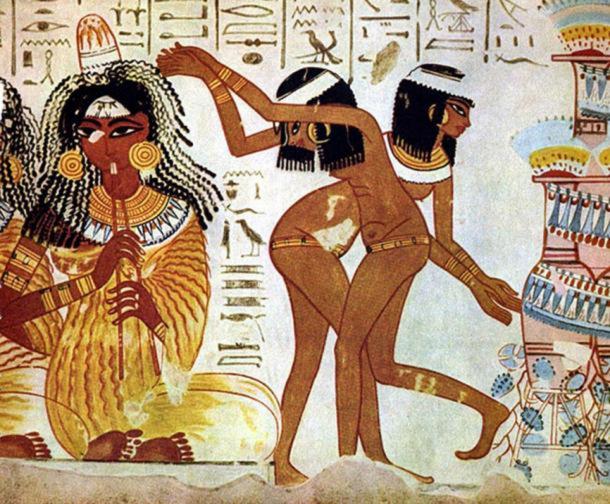
Ancient Egyptian women wearing kohl, from a tomb mural in Thebes (1420–1375 BC). ( Public Domain )
Top Image: The mummified head. Source: Museo de Antropología Médica, Forense, Paleopatología y Criminalística, Profesor Reverte Coma
By Mark Miller
Source: https://www.ancient-origins.net/news-history-archaeology/ancient-egyptian-mummy-head-shows-woman-had-skin-condition-due-beauty-020864
Posted by: jaegerexan1946.blogspot.com
0 Response to "Who Invented Makeup Pictures Of Egyptian Mummies"
Post a Comment